Easy booking, trusted specialists, and compassionate multispeciality care.
Advanced Assessment of Subtle Heart Muscle Function
Strain Imaging is an advanced echocardiographic technique used to evaluate the subtle movement and deformation of the heart muscle. At Serenity Health Care, strain imaging is performed using state-of-the-art cardiac imaging technology and standardized protocols to provide highly precise and detailed assessment of heart muscle performance.
Unlike conventional echocardiography, which evaluates overall heart movement, strain imaging detects early changes in myocardial function that may not be visible on routine tests. This allows for earlier diagnosis of cardiac dysfunction, improved risk assessment, and more accurate monitoring of disease progression or treatment response.
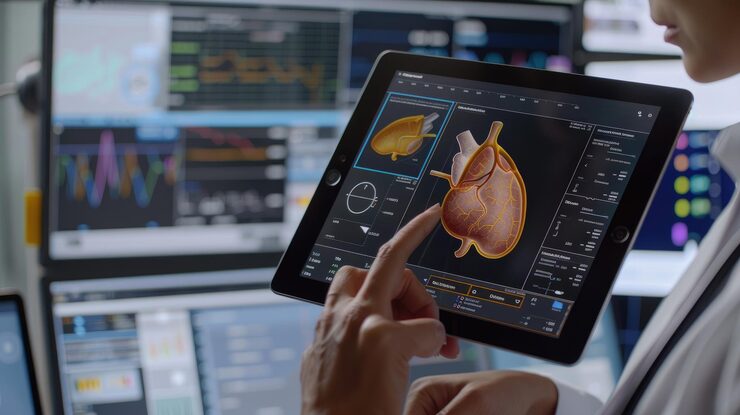
The primary purpose of strain imaging is to measure how well different segments of the heart muscle contract and relax during each heartbeat. It provides quantitative data on myocardial deformation, offering deeper insight into heart function beyond standard imaging techniques.
Strain imaging is especially valuable for detecting early heart muscle damage before symptoms appear or before conventional echocardiography shows abnormalities. This makes it a powerful tool for preventive cardiology, early intervention, and long-term heart health management.
Strain imaging helps in identifying early myocardial dysfunction in a wide range of cardiac conditions. It is particularly useful in patients with hypertension, diabetes, cardiomyopathies, and early heart failure, where subtle heart muscle impairment may be present despite normal overall heart function.
This technique is also valuable in monitoring patients undergoing treatments that may affect the heart, such as chemotherapy, and in evaluating heart function after heart attacks. By detecting minor changes in myocardial performance, strain imaging supports timely intervention and improved clinical outcomes.
Strain imaging may be recommended for patients with cardiovascular risk factors such as high blood pressure, diabetes, obesity, or a family history of heart disease. It is also advised when conventional echocardiography findings are borderline or when early cardiac dysfunction is suspected despite minimal symptoms.
In addition, strain imaging is commonly used for baseline and follow-up assessment in patients requiring close cardiac monitoring, helping guide treatment decisions and assess response to therapy.
At Serenity Health Care, strain imaging is conducted in a comfortable and patient-friendly environment using advanced echocardiographic systems. The evaluation begins with a detailed clinical review, followed by high-resolution imaging of the heart muscle during normal cardiac cycles.
The captured data is carefully analyzed to assess myocardial strain patterns and detect subtle functional changes. Patients receive a clear explanation of results along with guidance on preventive strategies, further investigations, or treatment when required.
Advanced strain imaging technology for precise assessment
Early detection of subtle heart muscle dysfunction
Evidence-based interpretation and reporting
Focus on preventive and personalized cardiac care
Seamless coordination with comprehensive cardiology services
Serenity Health Care offers reliable and advanced strain imaging as part of its comprehensive cardiology diagnostic services. Our team is committed to delivering accurate evaluation, timely insights, and patient-centered guidance to support long-term heart health.
Early detection of myocardial dysfunction can significantly improve outcomes — and strain imaging plays a key role in achieving this goal.